Problem Statement

Inefficiencies on a core offering

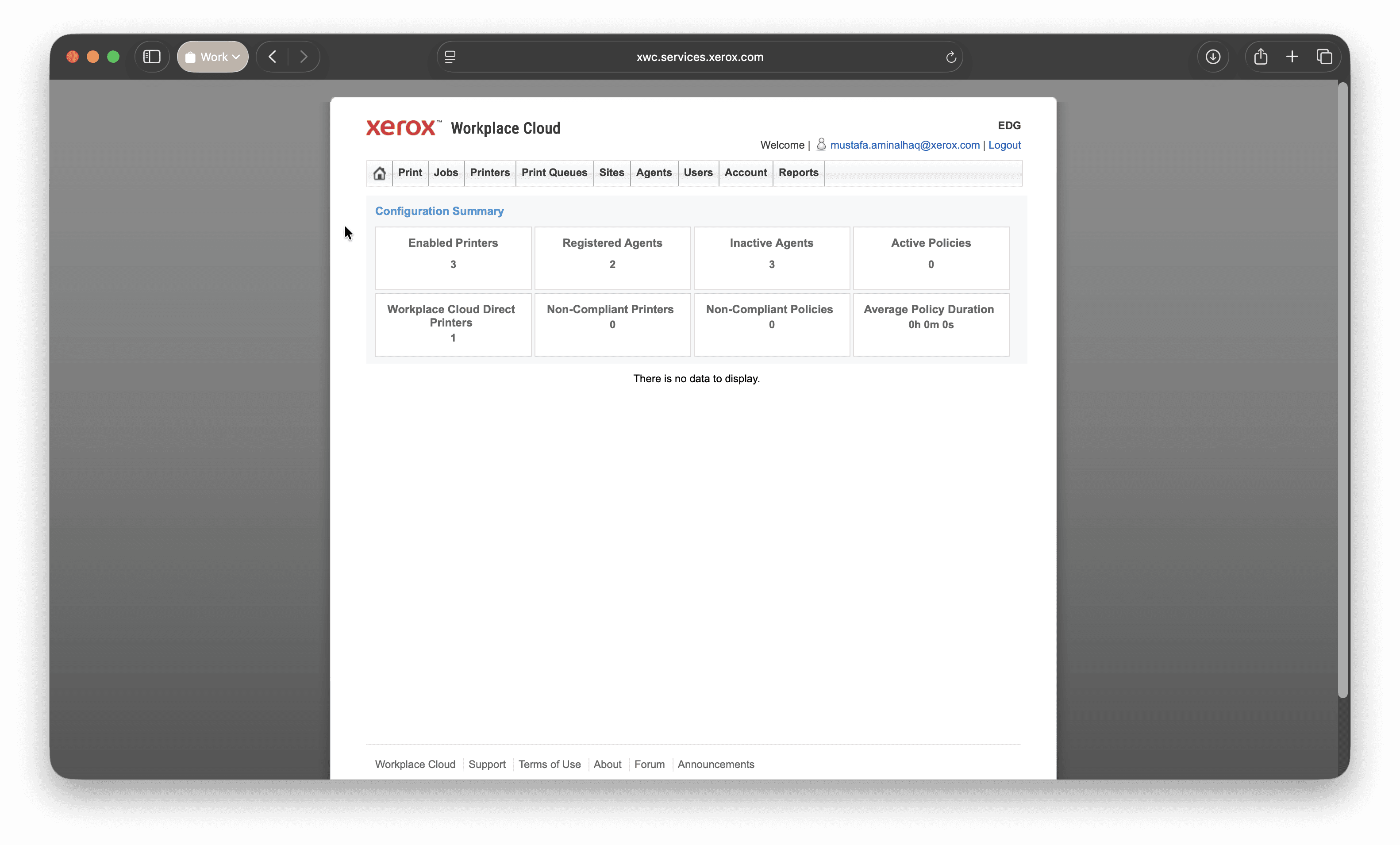
IT admins at Xerox needed an efficient way to manage devices, printers, and licenses because the existing portal's information architecture forced constant navigation between pages, eroding user trust and driving migration to competitors. The challenge was to modernize the experience and establish scalable design patterns by redesigning the platform from the ground up.
Problem Statement

Inefficiencies on a core offering

IT admins at Xerox needed an efficient way to manage devices, printers, and licenses because the existing portal's information architecture forced constant navigation between pages, eroding user trust and driving migration to competitors. The challenge was to modernize the experience and establish scalable design patterns by redesigning the platform from the ground up.

Problem Statement

Inefficiencies on a core offering

IT admins at Xerox needed an efficient way to manage devices, printers, and licenses because the existing portal's information architecture forced constant navigation between pages, eroding user trust and driving migration to competitors. The challenge was to modernize the experience and establish scalable design patterns by redesigning the platform from the ground up.

Research and Understanding

Finding the root cause

I conducted 1:1 sessions with 15 IT admins to map their end-to-end workflows. This helped me identify critical moments where users needed heavy navigation.
Research and Understanding

Finding the root cause

I conducted 1:1 sessions with 15 IT admins to map their end-to-end workflows. This helped me identify critical moments where users needed heavy navigation.

Research and Understanding

Finding the root cause

I conducted 1:1 sessions with 15 IT admins to map their end-to-end workflows. This helped me identify critical moments where users needed heavy navigation.

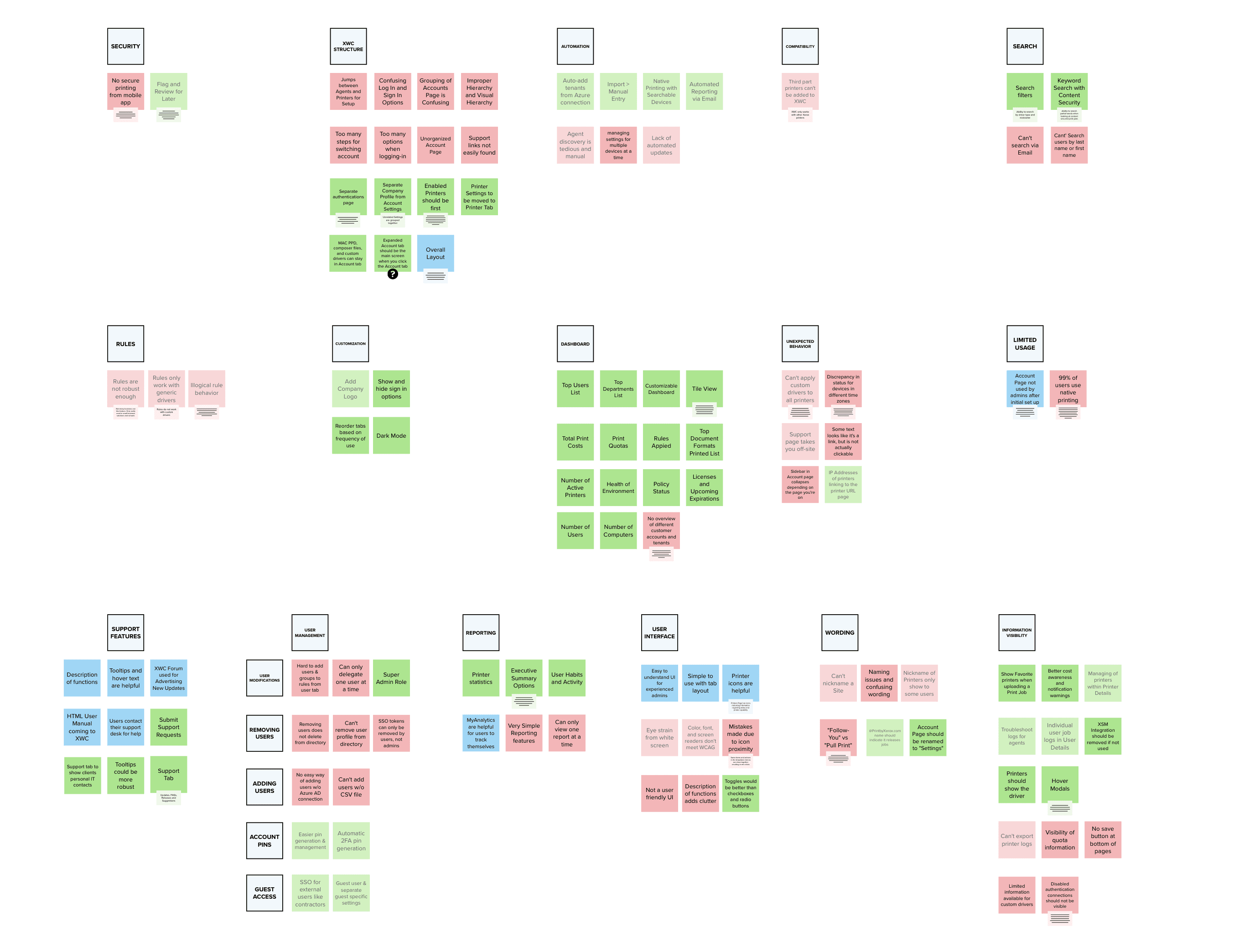
Clustered interview insights from all participants and organized pain points to understand the largest and most common issues.
Clustered interview insights from all participants and organized pain points to understand the largest and most common issues.

Clustered interview insights from all participants and organized pain points to understand the largest and most common issues.

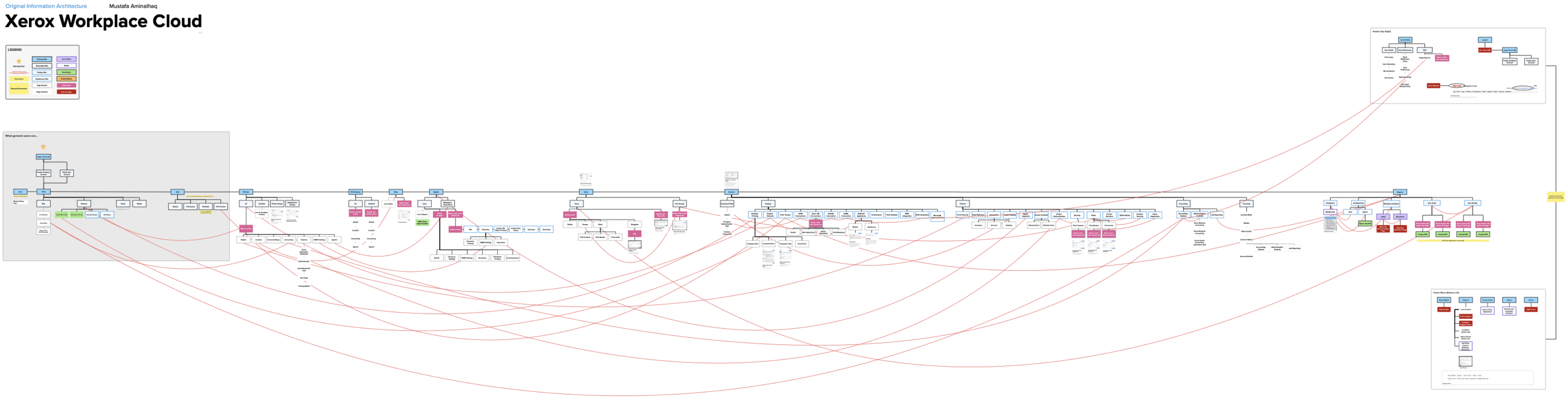
Existing IA structure was mapped, revealing fragmentation and scattered information. Users couldn’t see system status from a single view, and constant clicking between pages contributed to user churn.

Existing IA structure was mapped, revealing fragmentation and scattered information. Users couldn’t see system status from a single view, and constant clicking between pages contributed to user churn.

Existing IA structure was mapped, revealing fragmentation and scattered information. Users couldn’t see system status from a single view, and constant clicking between pages contributed to user churn.

Design Explorations

Designing for systems thinking

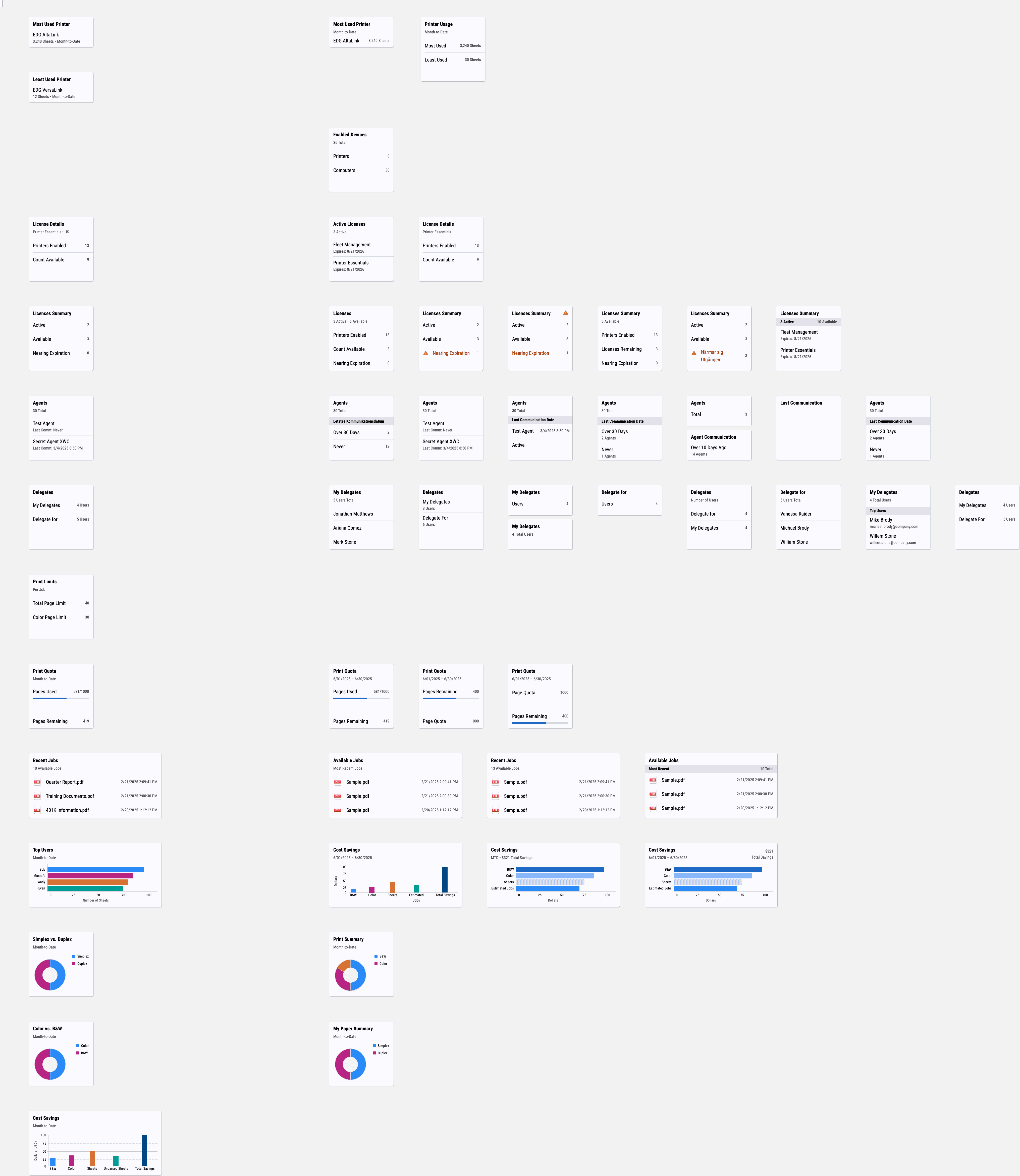
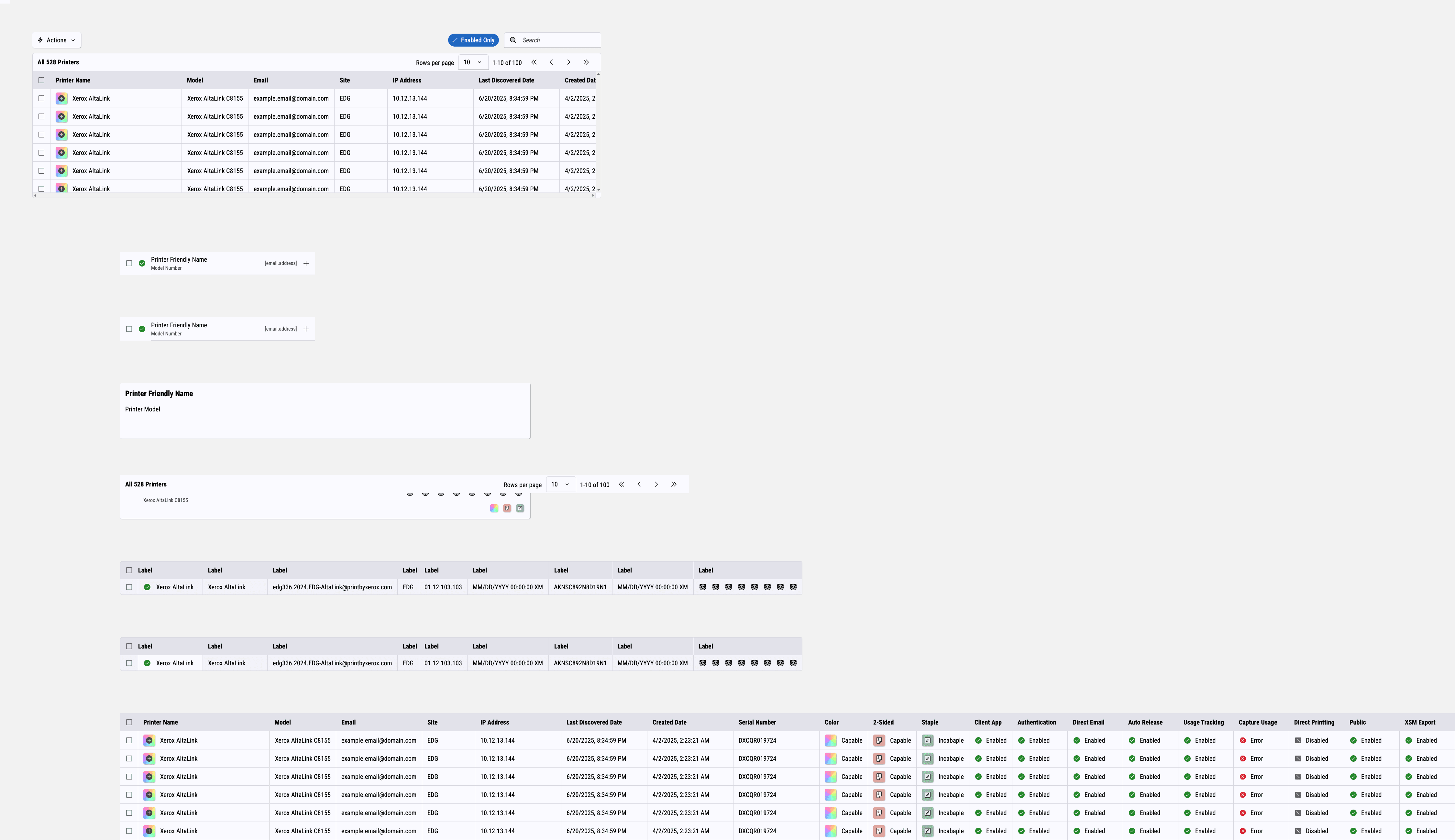
As part of planning and exploring how to incorporate all the features in a new and easy-to-use layout, I had to take information from the architecture and compare it to the tools and components we had in the Xerox Interface Design System (XIDS). That included making sure to design with phones and tablets in mind, and making sure these workflows were easy to understand.
Design Explorations

Designing for systems thinking

As part of planning and exploring how to incorporate all the features in a new and easy-to-use layout, I had to take information from the architecture and compare it to the tools and components we had in the Xerox Interface Design System (XIDS). That included making sure to design with phones and tablets in mind, and making sure these workflows were easy to understand.

Design Explorations

Designing for systems thinking

As part of planning and exploring how to incorporate all the features in a new and easy-to-use layout, I had to take information from the architecture and compare it to the tools and components we had in the Xerox Interface Design System (XIDS). That included making sure to design with phones and tablets in mind, and making sure these workflows were easy to understand.

Solution: Dashboard

A dashboard with reusable system design

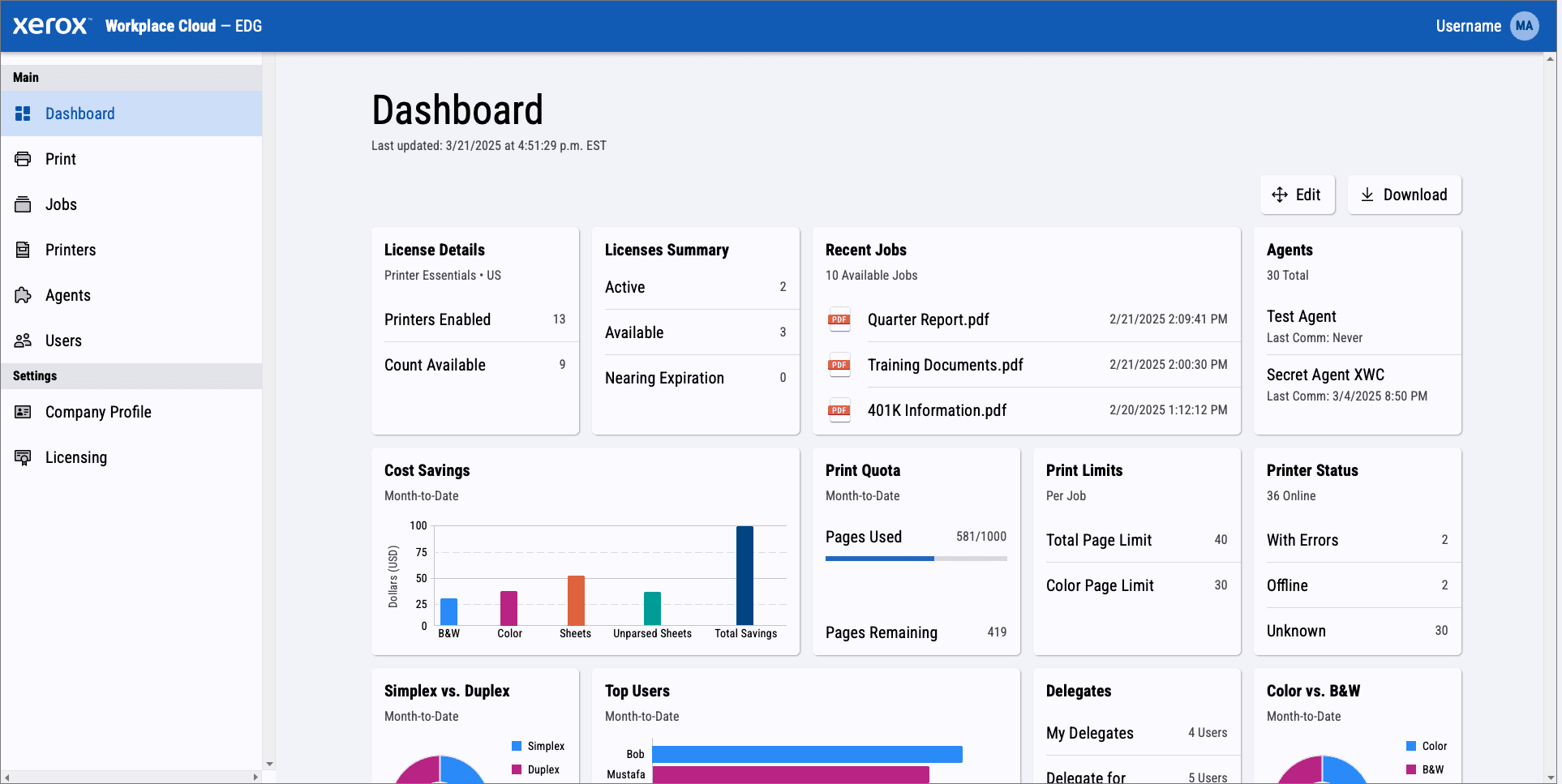
I built the dashboard using a grid-based, modular architecture. The modularity meant that as the platform grew, new cards could be added without breaking the system—this framework became a template for dashboards across the entire product portfolio.

Solution: Dashboard

A dashboard with reusable system design

I built the dashboard using a grid-based, modular architecture. The modularity meant that as the platform grew, new cards could be added without breaking the system—this framework became a template for dashboards across the entire product portfolio.

Solution: Dashboard

A dashboard with reusable system design

I built the dashboard using a grid-based, modular architecture. The modularity meant that as the platform grew, new cards could be added without breaking the system—this framework became a template for dashboards across the entire product portfolio.

For Users

A clean, organized interface that centralizes critical information instead of fragmenting it across multiple pages.

􀉬

For Users

A clean, organized interface that centralizes critical information instead of fragmenting it across multiple pages.

􀉬

For Users

A clean, organized interface that centralizes critical information instead of fragmenting it across multiple pages.

􀉬

For Developers

A reusable, scalable grid system that enabled 10% faster development and could accommodate future features without requiring redesign.

􂫒

For Developers

A reusable, scalable grid system that enabled 10% faster development and could accommodate future features without requiring redesign.

􂫒

For Developers

A reusable, scalable grid system that enabled 10% faster development and could accommodate future features without requiring redesign.

􂫒

Solution: Printers Page

Density while minimizing scrolling

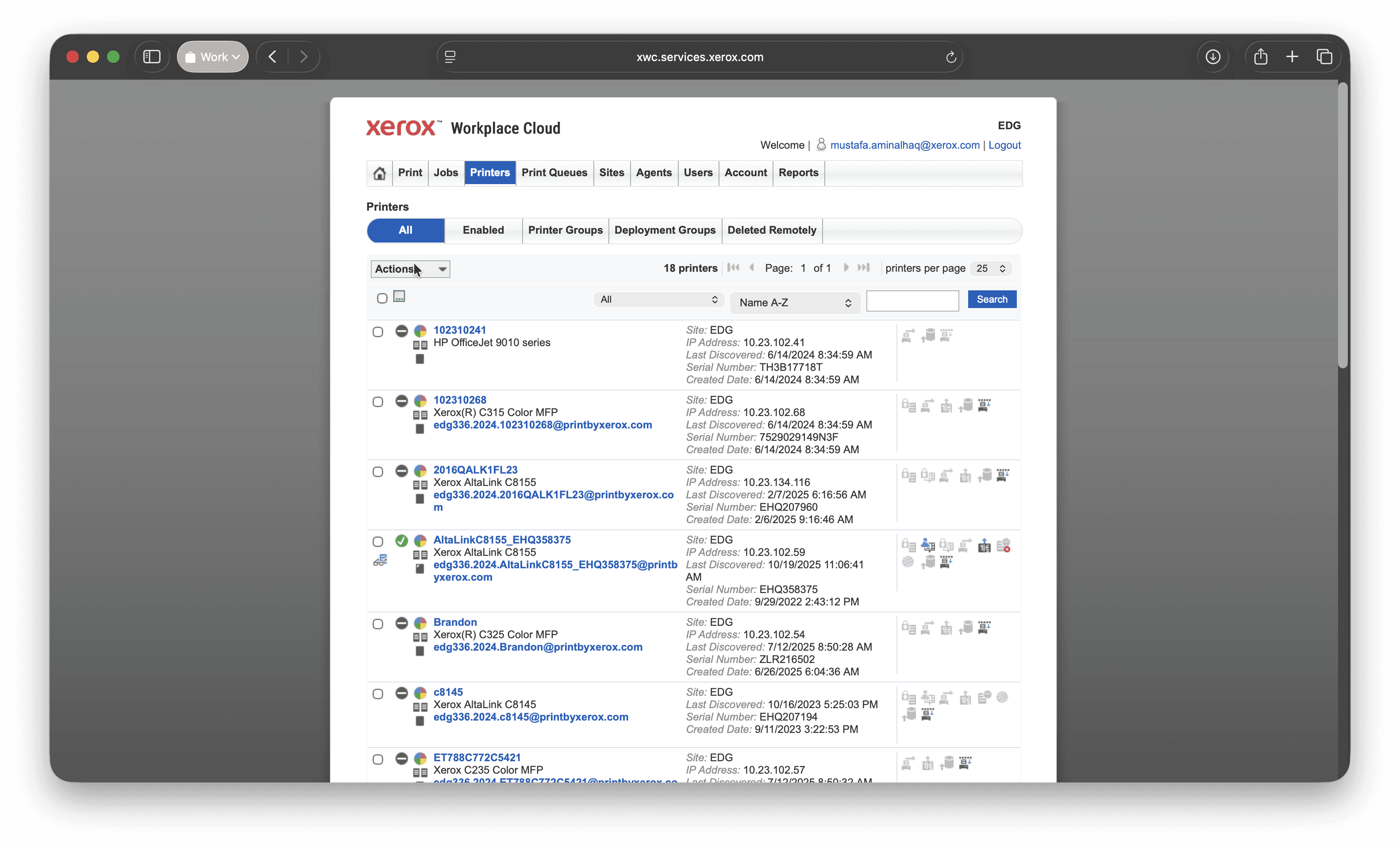
The original printers page was paradoxically too dense and wasteful, forcing horizontal scrolling while hiding information. User research revealed the core need: admins wanted to see all their printer information at once without scrolling.

Solution: Printers Page

Density while minimizing scrolling

The original printers page was paradoxically too dense and wasteful, forcing horizontal scrolling while hiding information. User research revealed the core need: admins wanted to see all their printer information at once without scrolling.

Solution: Printers Page

Density while minimizing scrolling

The original printers page was paradoxically too dense and wasteful, forcing horizontal scrolling while hiding information. User research revealed the core need: admins wanted to see all their printer information at once without scrolling.

Increased Density

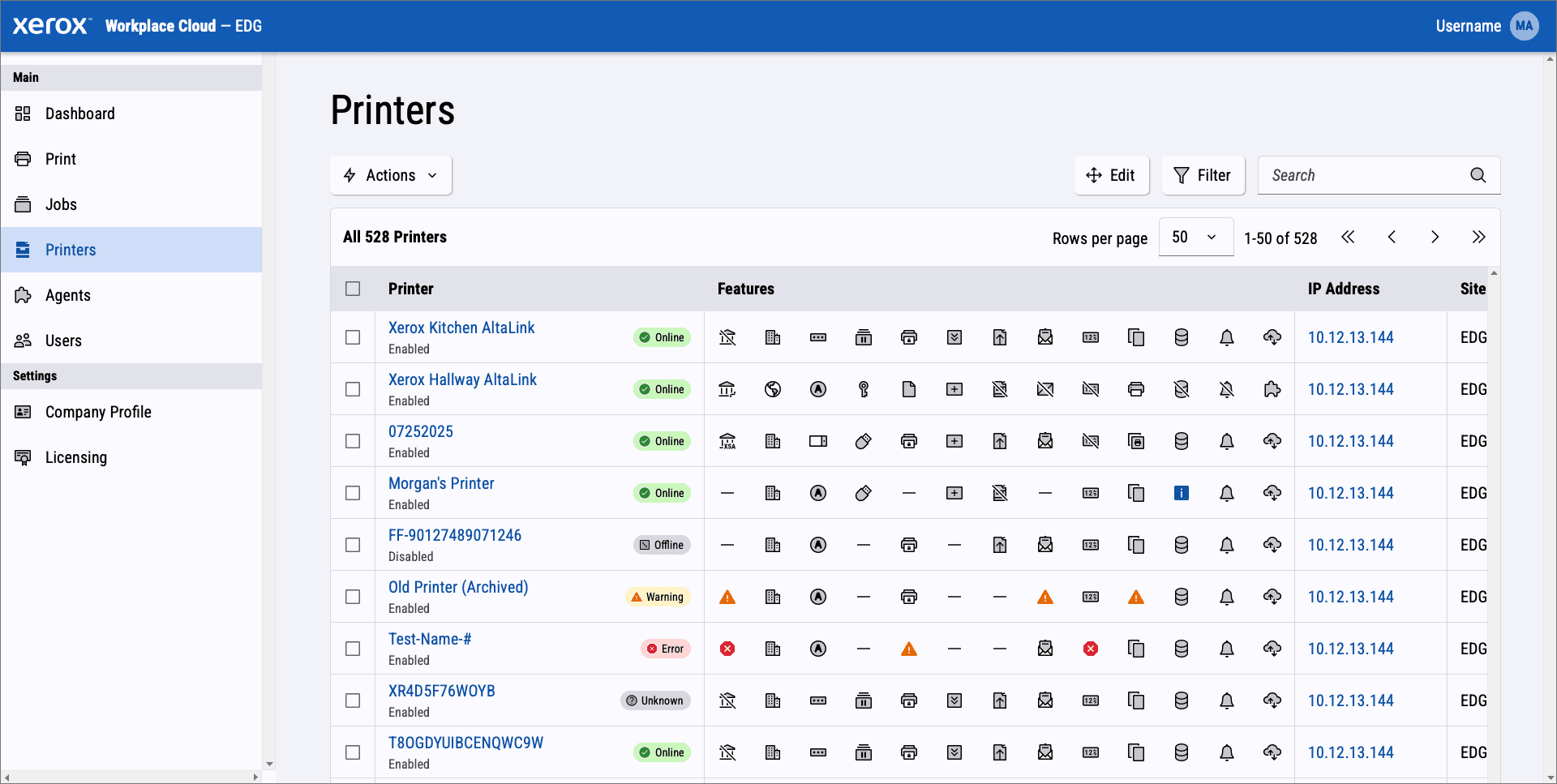
Information density increased, scrolling eliminated, and users maintained full control over their view. Users were also able to now fully customize their views by sorting, filtering, and adjusting columns to their specific workflows.

􁹧

Increased Density

Information density increased, scrolling eliminated, and users maintained full control over their view. Users were also able to now fully customize their views by sorting, filtering, and adjusting columns to their specific workflows.

􁹧

Increased Density

Information density increased, scrolling eliminated, and users maintained full control over their view. Users were also able to now fully customize their views by sorting, filtering, and adjusting columns to their specific workflows.

􁹧

Reduced Scrolling

I reduced the page width by 55% by removing redundant labels while preserving accessibility through tooltips. I added column toggle controls, allowing users to customize what they see.

􀧐

Reduced Scrolling

I reduced the page width by 55% by removing redundant labels while preserving accessibility through tooltips. I added column toggle controls, allowing users to customize what they see.

􀧐

Reduced Scrolling

I reduced the page width by 55% by removing redundant labels while preserving accessibility through tooltips. I added column toggle controls, allowing users to customize what they see.

􀧐

Customization

On top of the other features, giving the users the option to customize really improves their experience. Now, users can focus on creating layouts that are exactly tailored to their needs, and no longer a one-size-fits-all design.
􀎑

Customization

On top of the other features, giving the users the option to customize really improves their experience. Now, users can focus on creating layouts that are exactly tailored to their needs, and no longer a one-size-fits-all design.

􀎑

Customization

On top of the other features, giving the users the option to customize really improves their experience. Now, users can focus on creating layouts that are exactly tailored to their needs, and no longer a one-size-fits-all design.

􀎑

Results

Benefits to Power Users and Xerox

The original printers page was paradoxically too dense and wasteful, forcing horizontal scrolling while hiding information. User research revealed the core need: admins wanted to see all their printer information at once without scrolling.

Results

Benefits to Power Users and Xerox

The original printers page was paradoxically too dense and wasteful, forcing horizontal scrolling while hiding information. User research revealed the core need: admins wanted to see all their printer information at once without scrolling.

Results

Benefits to Power Users and Xerox

The original printers page was paradoxically too dense and wasteful, forcing horizontal scrolling while hiding information. User research revealed the core need: admins wanted to see all their printer information at once without scrolling.

Fewer Clicks

By centralizing critical information on the dashboard, users no longer had to navigate between multiple pages to see status or initiate actions.

34%

Fewer Clicks

By centralizing critical information on the dashboard, users no longer had to navigate between multiple pages to see status or initiate actions.

34%

Fewer Clicks

By centralizing critical information on the dashboard, users no longer had to navigate between multiple pages to see status or initiate actions.

34%

Faster Workflows

The simplified architecture enabled IT admins to complete handoffs and routine tasks almost one-fifth faster, freeing them for strategic work.

24%

Faster Workflows

The simplified architecture enabled IT admins to complete handoffs and routine tasks almost one-fifth faster, freeing them for strategic work.

24%

Faster Workflows

The simplified architecture enabled IT admins to complete handoffs and routine tasks almost one-fifth faster, freeing them for strategic work.

24%

Dashboard Framework

A reusable dashboard framework document that other teams across Xerox could use for their own solutions. Rather than each team redesigning dashboards from scratch, they now had a proven, documented system.

New

Dashboard Framework

A reusable dashboard framework document that other teams across Xerox could use for their own solutions. Rather than each team redesigning dashboards from scratch, they now had a proven, documented system.

New

Dashboard Framework

A reusable dashboard framework document that other teams across Xerox could use for their own solutions. Rather than each team redesigning dashboards from scratch, they now had a proven, documented system.

New

Conclusion

Portal efficiencies and new foundations at Xerox

The XWC Portal redesign transformed a fragmented, inefficient system into a unified, scalable experience that empowered IT admins and set a new design standard across Xerox’s enterprise tools. By addressing the core architectural flaws and introducing reusable frameworks, the solution not only improved usability and performance metrics but also established a foundation for consistent, future-proof design across the organization.
Conclusion

Portal efficiencies and new foundations at Xerox

The XWC Portal redesign transformed a fragmented, inefficient system into a unified, scalable experience that empowered IT admins and set a new design standard across Xerox’s enterprise tools. By addressing the core architectural flaws and introducing reusable frameworks, the solution not only improved usability and performance metrics but also established a foundation for consistent, future-proof design across the organization.

Conclusion

Portal efficiencies and new foundations at Xerox

The XWC Portal redesign transformed a fragmented, inefficient system into a unified, scalable experience that empowered IT admins and set a new design standard across Xerox’s enterprise tools. By addressing the core architectural flaws and introducing reusable frameworks, the solution not only improved usability and performance metrics but also established a foundation for consistent, future-proof design across the organization.